Gunite & Concrete Pools
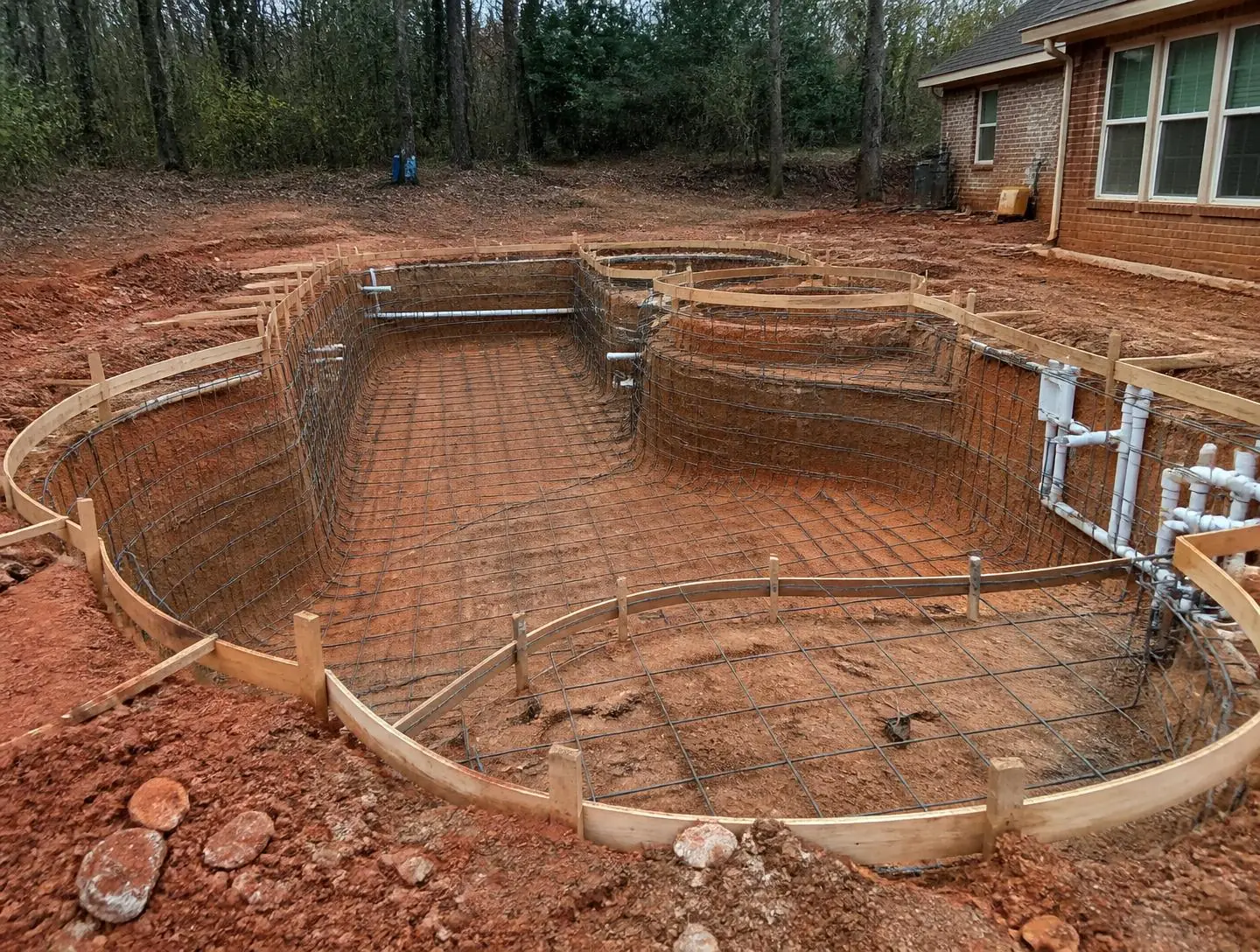
Concrete pools are built in place: steel is tied, gunite is pneumatically applied, then the shell is finished with tile, coping and an interior surface.
How is a gunite pool built?
After excavation, a steel reinforcing cage is tied to the engineered design and plumbing is roughed in. Gunite or shotcrete is then sprayed against the formed earth and steel to create a monolithic shell, which cures before tile, coping, decking and the interior finish are installed. The result is a structure that can take essentially any shape or depth.
Why builders reach for concrete
- Any shape, any depth profile, any size the lot can accommodate
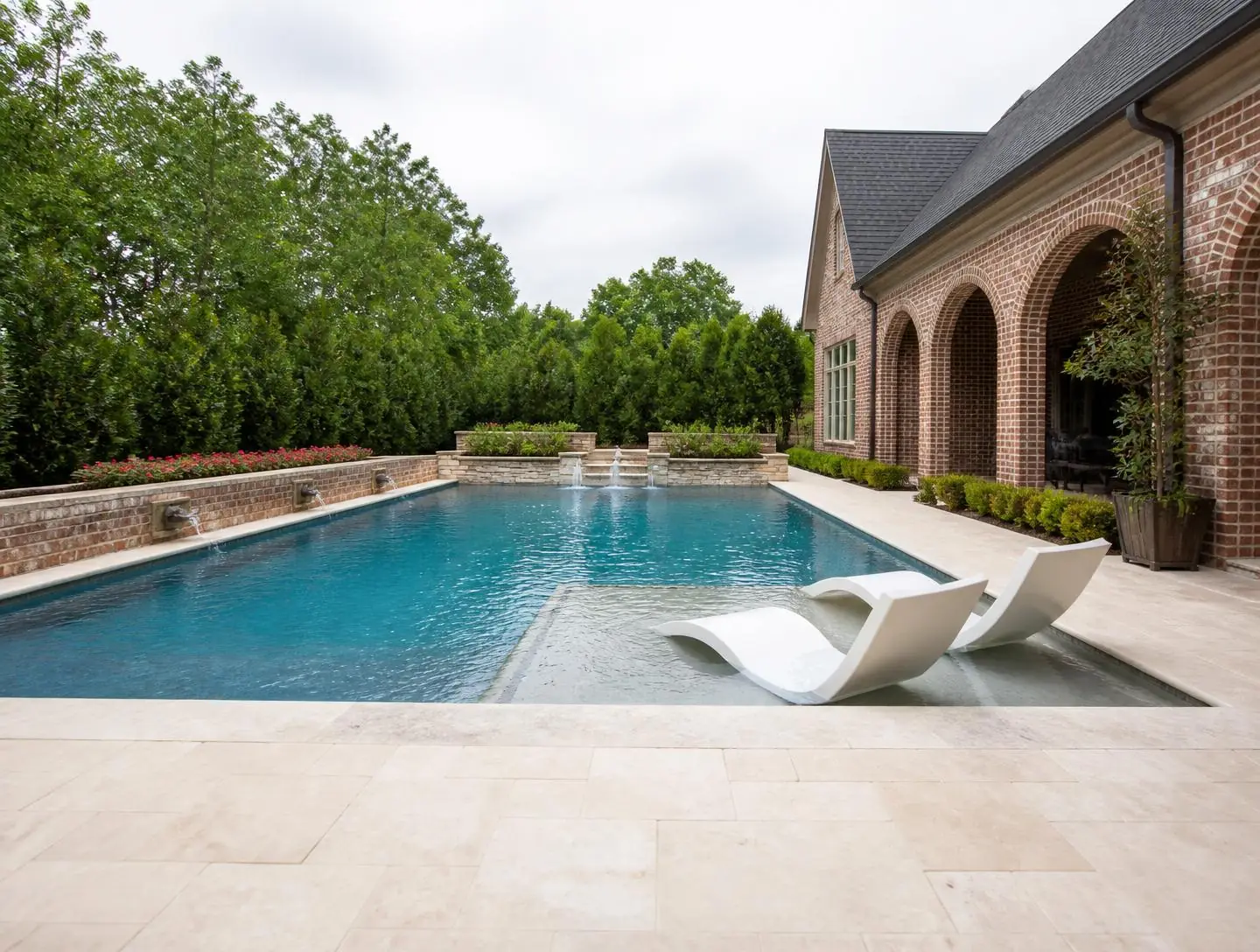
- Raised walls, vanishing edges, integrated spas and sun ledges
- Structural flexibility on sloped or complicated sites
- Interior finish can be renewed later rather than replaced wholesale
Interior finishes
Standard plaster is the most economical surface and the shortest-lived. Quartz aggregate finishes add durability and a wider color range. Pebble finishes are the most durable of the common options and give water a deeper, more natural tone, at a higher up-front cost.
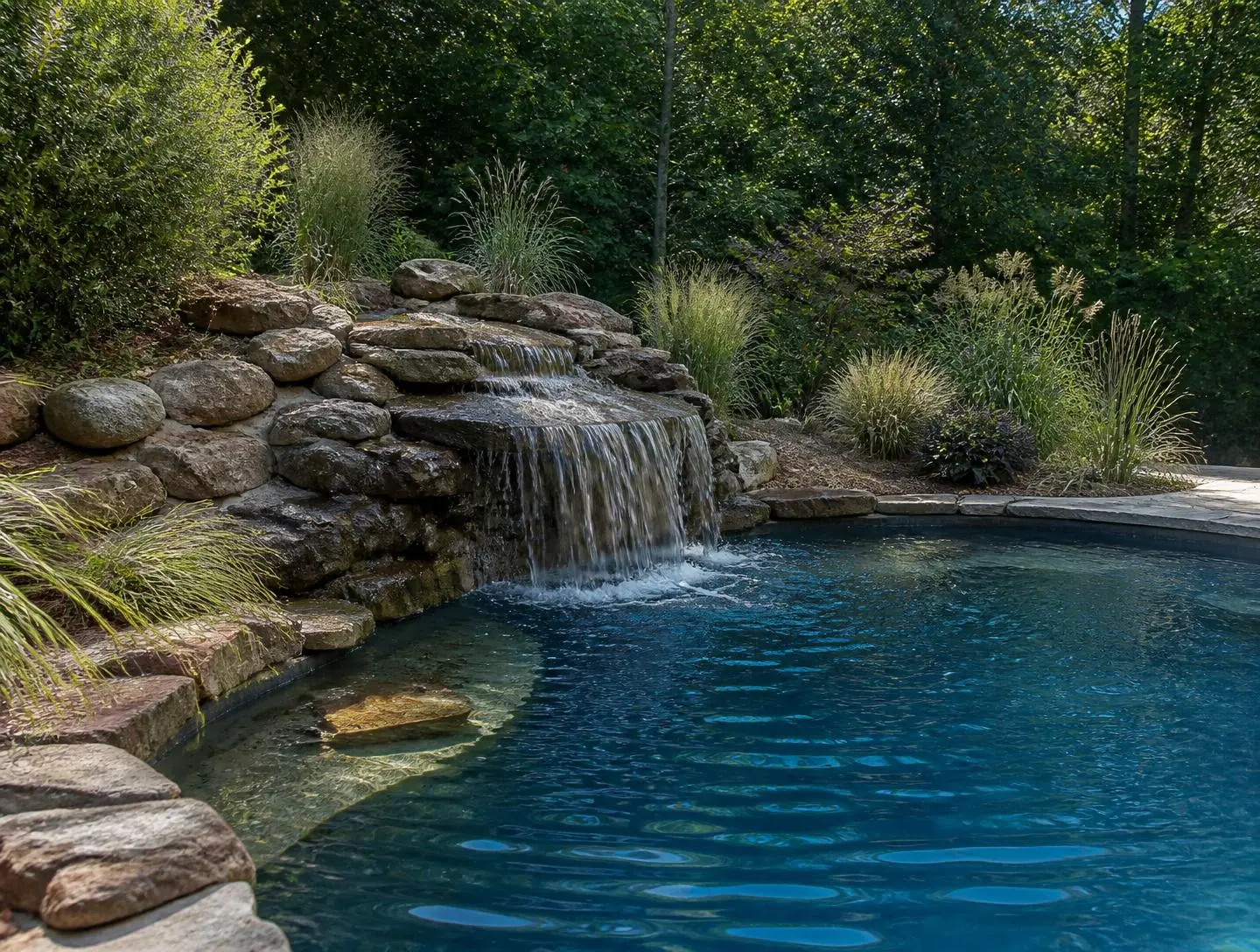
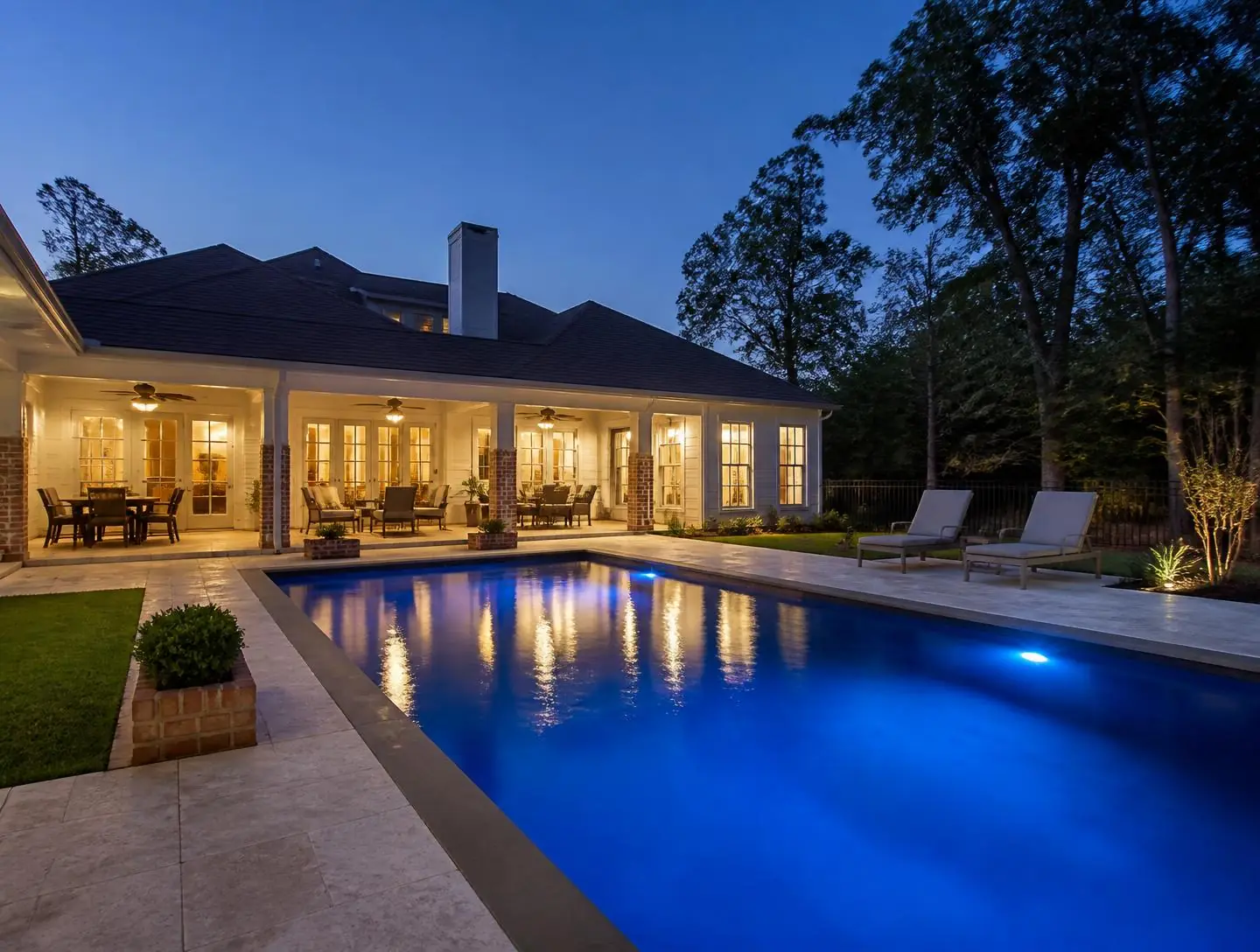
Finish color changes perceived water color more than anything else in the design. Lighter finishes read bright and tropical; darker greys and charcoals read closer to still natural water and pair well with stone coping and modern architecture.
Ownership expectations
Concrete surfaces are porous and mineral-reactive, so water chemistry needs consistent attention and the interior finish has a service life measured in years rather than decades. Resurfacing is a normal, planned part of concrete pool ownership.
In exchange, the shell itself is extremely long-lived and can be remodeled - reshaped edges, new tile, new finish, added features - without starting over.
Frequently asked questions
Start with a conversation about your backyard
Share your yard, your budget range and how you want to use the space. You will get straight answers about what is realistic before anything is designed.