Pool Resurfacing
Resurfacing is scheduled maintenance for concrete pools, not an emergency repair - as long as it happens before the surface fails.
When does a pool need resurfacing?
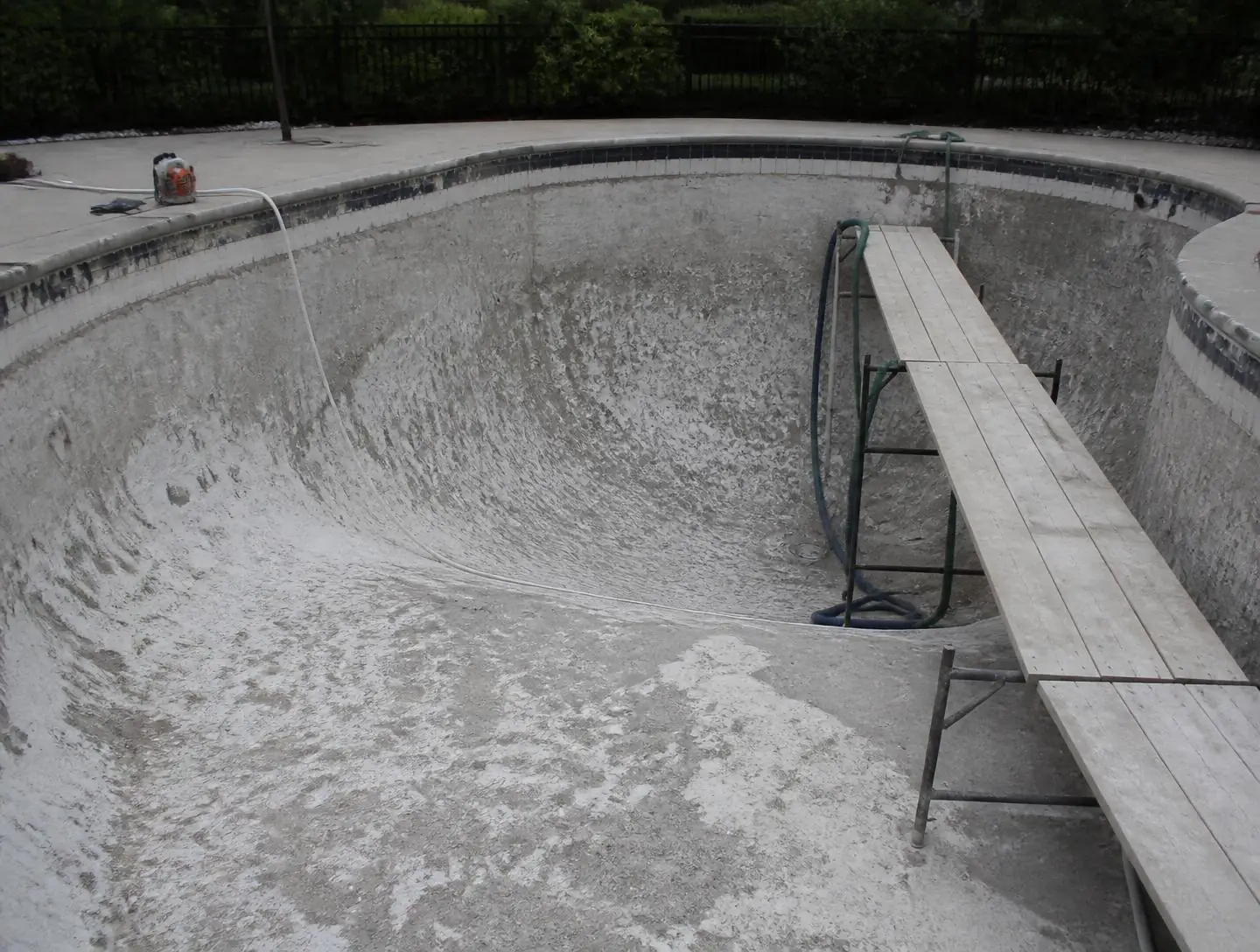
When the interior surface becomes rough underfoot, chalky, heavily stained, repeatedly etched, or begins delaminating in patches. Plaster typically reaches this point sooner than quartz or pebble finishes. Resurfacing before the surface fully fails prevents water reaching the shell and keeps the job cosmetic rather than structural.
How the process works
Drain & inspect
The pool is drained and the surface, tile line and fittings are examined for damage and movement.
Prep
Failed material is chipped or hydro-blasted away and the shell is cleaned to a sound bonding surface.
Repairs
Cracks, hollow spots and fitting details are addressed before any finish is applied.
Finish application
The new interior material is applied and troweled, or exposed if it is an aggregate finish.
Fill & start-up
The pool is filled continuously and put through a start-up regimen that protects the new surface.
Comparing finishes
- Plaster - lowest cost, smoothest feel, shortest service life
- Quartz aggregate - better durability and color stability at a moderate premium
- Pebble - most durable common option, textured feel, deepest water color
The start-up matters as much as the finish
A new interior surface is chemically vulnerable for its first weeks. Continuous filling, careful brushing and monitored chemistry during start-up prevent the staining, scaling and streaking that otherwise appear permanently in an expensive new surface.
Start with a conversation about your backyard
Share your yard, your budget range and how you want to use the space. You will get straight answers about what is realistic before anything is designed.