Swimming Pool Maintenance Guide
Pool care is a rhythm, not a rescue. Owners who stay ahead of it spend a fraction of the time and money of owners who react.

What is the basic weekly pool maintenance routine?
Test and balance sanitizer, pH and total alkalinity; empty skimmer and pump baskets; brush walls, steps and the waterline; check the filter pressure against its clean baseline; verify the cleaner is covering the floor; and run the pump long enough each day to turn the water over completely. Clean or backwash the filter when pressure rises above baseline.
The weekly routine
Test first
Adjust based on readings, never by habit. Balance alkalinity before chasing pH.
Clear baskets
Skimmer and pump baskets restrict flow the moment they fill.
Brush
Walls, steps, benches and shaded corners where algae starts.
Check pressure
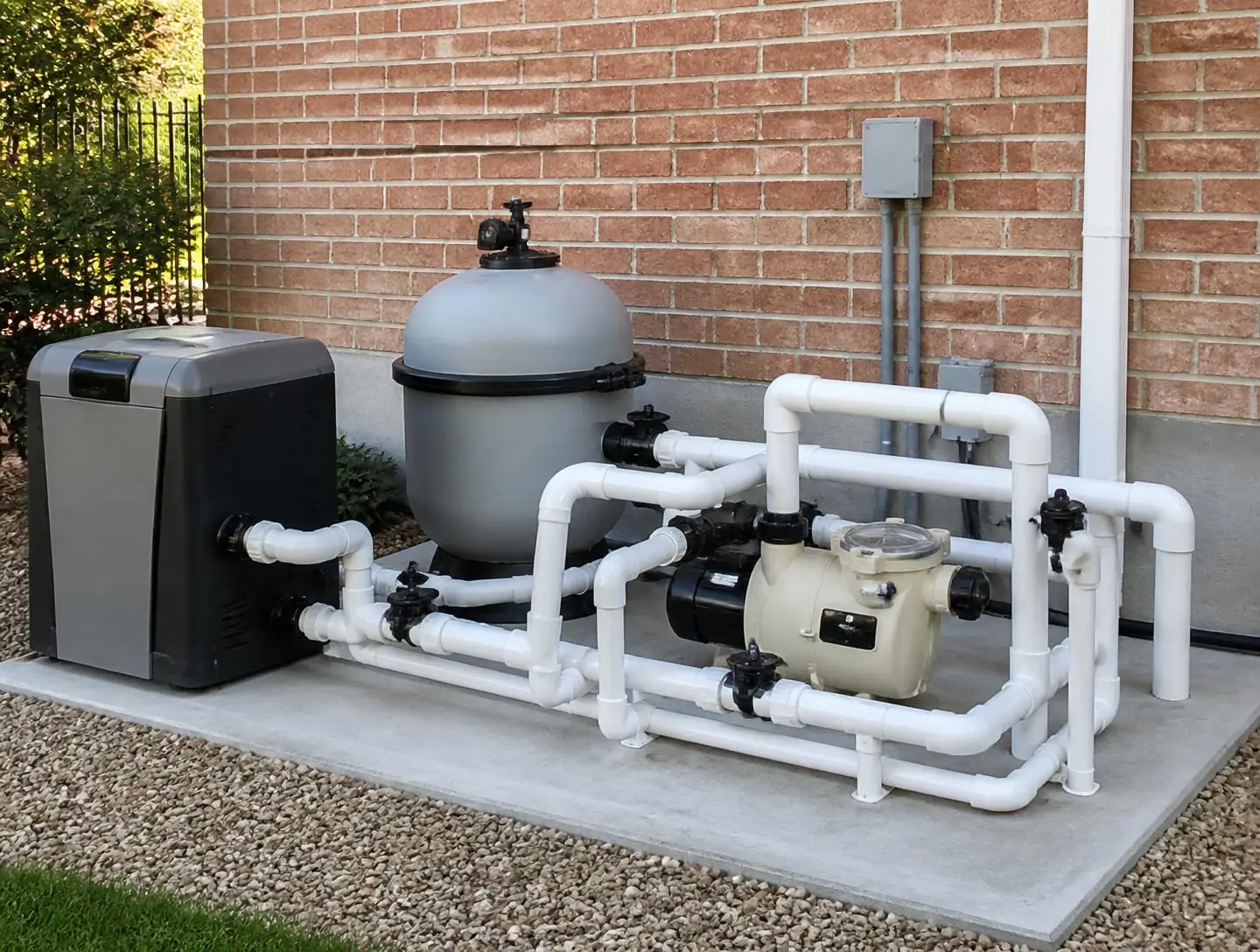
A rise of several psi over the clean baseline means it is time to clean the filter.
Inspect the pad
Look for drips, listen for new noise, confirm the schedule is running.
Chemistry basics
Sanitizer keeps the water safe. pH determines how effective that sanitizer is and how comfortable the water feels. Total alkalinity buffers pH so it stops swinging. Calcium hardness protects plaster surfaces. Stabilizer protects chlorine from sunlight, but too much of it blunts sanitizer performance - a common cause of persistent algae in hot climates.
The Mississippi calendar
- Spring - heavy pollen loads filters and consumes sanitizer quickly
- Summer - heat and daylight drive chlorine demand and algae growth
- Storm season - dilution, debris and runoff after heavy rain
- Fall - leaf drop is the biggest strain on skimmers and baskets
- Winter - mild here, so most pools stay open with reduced run time
Start with a conversation about your backyard
Share your yard, your budget range and how you want to use the space. You will get straight answers about what is realistic before anything is designed.